

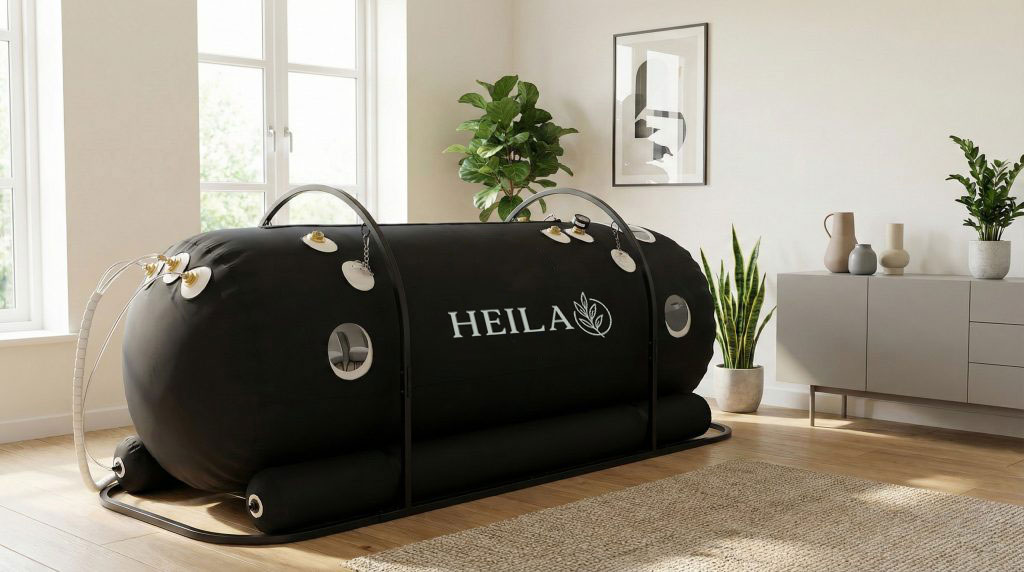
Hyperbaric oxygen therapy — HBOT — has been used in clinical settings for decades. Wound healing, decompression sickness, carbon monoxide poisoning: these are the applications most medical professionals have been familiar with for years.
But something has shifted. Over the last five years, HBOT has moved from hospital wards into homes, sports facilities and wellness clinics. Elite athletes use it. Long COVID patients use it. People managing chronic inflammation, improving sleep, and supporting brain health use it.
So what’s actually going on inside a chamber — and is any of it backed by science?
The principle is straightforward. You breathe oxygen-enriched air inside a pressurised chamber. The increased atmospheric pressure — typically 1.3 to 1.5 times normal atmospheric pressure for mild HBOT — allows your body to absorb significantly more oxygen than it would at sea level.
At normal pressure, oxygen is carried almost entirely by red blood cells. Under pressure, it dissolves directly into the bloodstream, plasma, and cerebrospinal fluid — reaching tissues that might otherwise have restricted blood flow. Areas that are inflamed, damaged or poorly oxygenated get a concentrated supply of the one thing cells need most to repair and function.
The applications range from clinically established to emerging:
Established clinical uses:
Growing evidence base:
It’s far less dramatic than it sounds.
You lie in a chamber — either a soft-sided inflatable chamber for mild HBOT, or a hard-sided clinical chamber. The pressure increases gradually (you’ll feel it in your ears, similar to descending on a plane), and then you simply breathe normally for the duration of the session — usually 60 to 90 minutes.
Most people find it deeply relaxing. There’s nothing to do except rest, listen to something, or let your body do its work.
Broadly, HBOT is used by four main groups:
1. Athletes and active people — for recovery acceleration, injury management and performance support. The ability to train harder and recover faster is the primary draw.
2. People managing chronic conditions — long COVID fatigue, autoimmune-related inflammation, chronic pain, neurological conditions. HBOT is increasingly being explored as a complementary therapy in these contexts.
3. Post-surgical or post-injury recovery — speeding up the body’s natural healing processes and reducing downtime.
4. General wellness and longevity — people who are interested in optimising how they feel and function long-term. Regular HBOT is increasingly part of broader biohacking and longevity protocols.
Mild hyperbaric oxygen therapy — the kind used outside of clinical hospital settings — is very well tolerated. The pressure levels used are significantly lower than clinical HBOT, and serious side effects at these levels are rare.
The most common experience is ear discomfort during pressurisation (similar to flying) and occasionally mild fatigue after a session as the body responds to the increased oxygen. Both typically resolve quickly.
As with any therapy, there are contraindications — including certain lung conditions, recent surgery, and some medications — which is why a brief health screening before the first session matters.
It depends on what you’re using it for.
For general recovery and wellness, many people notice meaningful improvements in energy, sleep quality and recovery speed within three to five sessions. For specific conditions or injury recovery, a course of 10 to 20 sessions is typically recommended for sustained results.
Consistency matters more than individual sessions. HBOT isn’t a one-and-done treatment — it works best as a regular part of a recovery or wellness protocol.
HBOT isn’t magic, and anyone claiming it cures everything should be treated with scepticism. The evidence base for some applications is strong; for others, it’s promising but still developing. It also isn’t cheap — which makes access a real issue for many people.
What it is: a genuinely interesting therapy with a solid physiological rationale, a growing body of clinical research, and a track record of real results for a broad range of people.
Heila Wellness provides HBOT sessions and chamber hire across Oxfordshire, Buckinghamshire and Hertfordshire — for individuals, corporate wellness days and sports events. Chambers are also available to purchase through the Heila Hytte shop with full delivery, setup and demonstration included.
The information in this article is for general educational purposes and does not constitute medical advice. If you have an existing health condition, please speak to your GP before beginning HBOT.
Share This :
